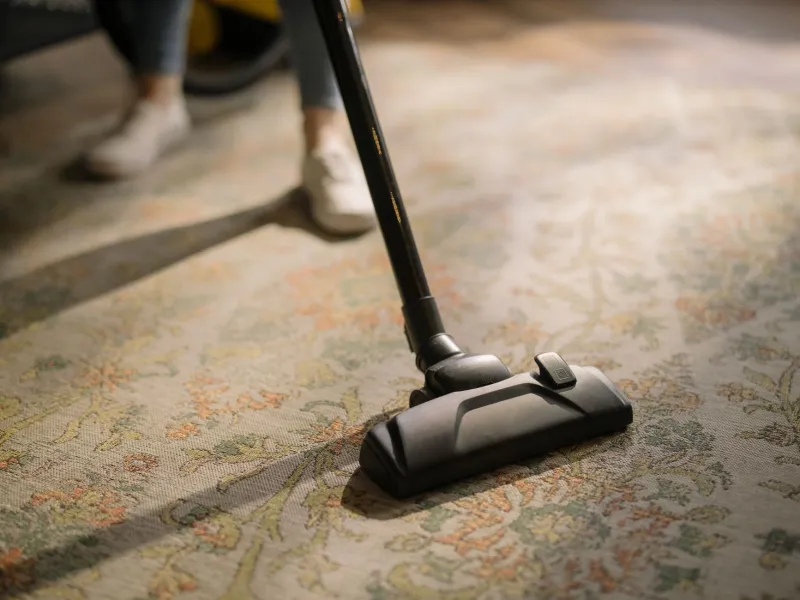
Before the Sofa Lands: Why Empty Rooms Are a London Carpet Cleaner's Best Friend
Photo: Robin Stott , CC BY-SA 2.0, via Wikimedia Commons
Moving home in London rarely follows a neat script. Completion dates slip, removals firms arrive early, keys get picked up late and someone always has a sofa stuck halfway through a stairwell. In the middle of all that, carpet cleaning can feel like one more box to tick. But there is one small scheduling win that makes a genuine difference: cleaning before the furniture arrives.
An empty room is not just easier to walk around. It gives a carpet cleaner proper access to the parts of the floor that spend most of their life hidden under beds, wardrobes and desks. It also gives the carpet a better chance to dry without being pressed down by furniture or covered by rugs. If you are moving into a London flat or house in 2026, that empty-room window is worth planning around.
Why an empty room changes the job
When a room is full, a cleaner spends time working around belongings. Sofas get shifted a few inches, bed frames stay put, and the middle of the carpet gets far more attention than the edges. That is normal, and it can still produce a good result. But an empty room lets the job breathe.
For a start, traffic lanes can be treated properly. Those darker paths between the door and the kitchen, or from the bedroom to the bathroom, are where London grit and everyday grime settle. Without furniture in the way, those lanes can be pre-treated and cleaned evenly rather than in awkward patches.
Edges benefit too. Skirting-board lines, corners and the strips beside fitted wardrobes collect dust, hair and whatever the vacuum has missed over the years. An empty room gives clear access to those areas. The same goes for odour treatment and spot work: if there is a suspicious patch near where the old bed sat, it is much easier to inspect and treat when the bed is gone.
Drying is the other big advantage. Carpets dry best with air moving across them. Empty rooms allow windows to be opened, air movers to be placed sensibly and furniture to stay out until the fibres are ready. That matters in London flats, where ventilation can be limited and autumn or winter drying can be slower than expected.
The diary problem: completion, keys and removals
The ideal slot is simple in theory: after the old occupants have gone and before your furniture comes in. In practice, London timings can be tight. Completion often happens around midday, removals may be booked for the same afternoon, and lettings agents may only release keys at a set time.
For buyers, the best approach is usually to book the clean for the day after completion, or at least a few hours after keys are released, before the removals van is due. If you can leave furniture in storage or on the van for one more night, you gain a much more useful cleaning window. It is not always possible, but it is worth asking the question before you confirm dates.
For tenants, the key is access and permission. If you are moving into a rented flat, check with the landlord or letting agent before arranging any cleaning that goes beyond a standard handover. Some tenancies require professional cleaning at the end, some do not, and some agents have their own check-out process. Get the arrangement in writing so there is no confusion later.
Landlords have the clearest advantage of all: the void period. A few empty days between tenancies are ideal for a deep clean, especially if the previous tenant had pets, smoked indoors or left behind heavy traffic marks. If the next tenant is due on a Saturday, try not to leave the carpet clean until Friday afternoon. Give yourself a buffer for drying and a final walk-through.
A simple pre-move carpet checklist
Before the clean, a little preparation goes a long way:
- Confirm access details, keys and any parking restrictions for the cleaning van.
- Clear small items, cables and floor clutter from the rooms being cleaned.
- Note any stains, pet accidents, odours or areas that have been covered by rugs for years.
- Mention any fitted furniture that cannot be moved, so the cleaner can plan around it.
- Ask for a realistic drying window rather than assuming the carpet will be dry in an hour.
- Keep cardboard or protective sheets handy for the first furniture to come back in, but do not trap moisture under plastic sheeting.
After the furniture lands
Once the clean is done and the rooms are dry, the move can carry on as normal. A few habits will help the carpet stay fresher for longer. Use felt pads under heavy furniture, avoid dragging boxes across the pile and vacuum high-traffic areas regularly once you are settled.
It is also worth doing a daylight check after the furniture is in. Look at the edges, the doorway zones and anywhere a stain was treated. If something still looks off, raise it sooner rather than later. Most issues are easier to address before a room is fully lived in.
If your move is happening in late autumn or winter, keep an eye on condensation and damp air. London flats can hold moisture, and a freshly cleaned carpet needs decent airflow to dry properly. Opening a window for short bursts, using extractor fans in bathrooms and not blocking vents can all help.
When the empty-room window closes
Not every move gives you the perfect gap. Sometimes the furniture arrives before the cleaner, or the keys turn up later than promised. That does not mean the clean is wasted. A professional team can work around furniture, protect belongings and focus on the accessible areas. It is simply a different job, with a bit less room to manoeuvre.
If you can, though, aim for the empty-room advantage. It is one of the few parts of a London move that can be made calmer with a bit of forward planning. Book early, confirm access, leave a drying buffer and let the carpet have the floor to itself for a few hours. The sofa can wait.