Cardboard Carpet Syndrome: Why London's Hard Water Is Quietly Ruining Your Shampoo
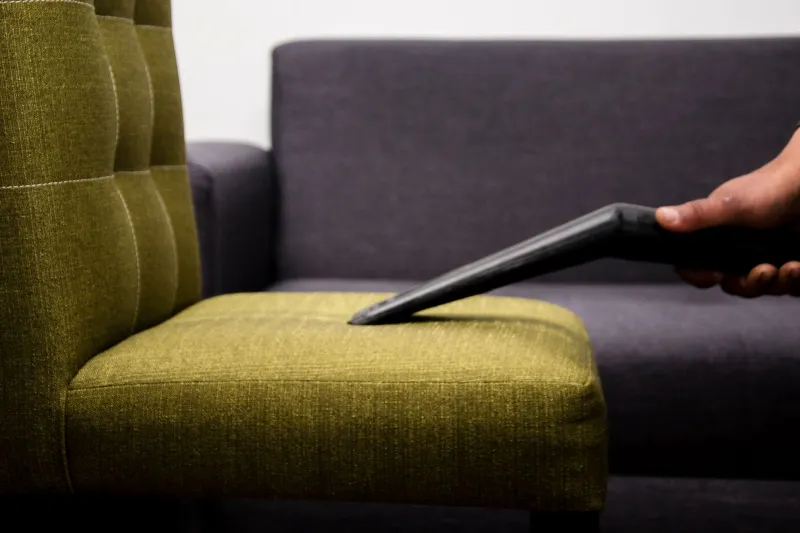
You hoover on Sunday. You spot-clean the coffee mark by the sofa. You give the whole living room a going-over with a supermarket shampoo because the bottle promised "deep clean, fresh finish." Two days later the carpet feels crisp underfoot, the colour looks a shade duller, and the grey lane between the door and the kitchen has already started to creep back. If that sounds familiar, you're not bad at cleaning. You're just cleaning with London water.
What's actually coming out of your tap
Most of the capital sits on chalk, and the water that reaches your kitchen tap has spent a long time travelling through it. Thames Water's own hardness figures commonly land somewhere between roughly 200 and 300 mg/l as calcium carbonate, depending on which zone you're in — comfortably in "hard" to "very hard" territory. Compare that with parts of the north-west or Scotland, where the same shampoo bottle behaves completely differently.
Those dissolved minerals are invisible in the glass. They don't stay invisible in a carpet. Water evaporates; calcium and magnesium don't. They stay in the pile, in the backing, and around the base of every tuft.
Why detergent turns a mineral problem into a texture problem
Here's the bit most people miss. Hard water and detergent don't get on. The calcium reacts with the cleaning agents to form an insoluble scum — the same grey ring you see in a bath that's been used by three people in a hard-water postcode. On a carpet, that scum acts like a very fine, slightly sticky dust trapped at the base of the fibres.
Three things then happen at once:
- The pile stiffens. Wool especially. It's a protein fibre, and strong alkaline products strip the natural softness out of it, leaving fibres that feel wiry and look slightly chalky.
- The colour flattens. Light bounces off a film of residue rather than off individual fibres, so even a well-kept carpet reads as tired.
- It resoils faster. Sticky residue grabs grit, hair and skin flakes out of the air. The traffic lane you cleaned on Sunday is grubby again by Thursday, and this time you scrub harder, which means more product, which means more residue. It's a loop, and it's a stubborn one.
Overdosing makes all of it worse. A capful is calibrated for a machine, not for a hand-held spot mix, and in a London flat where the windows open four inches, none of that extra product is going anywhere except into the carpet.
Three tests you can run before lunch
You don't need a lab. You need a glass, a kettle and a clean white towel.
The lather test. Half-fill a glass with cold tap water, drop in a sliver of plain soap and shake for ten seconds. Soft water gives you a thick, creamy head. Hard water gives you a thin, curdled, slightly grey froth — and that's what's happening inside your carpet when you shampoo it.
The kettle test. Look at the element. That pale crust is the same mineral load landing in your pile every time you wet-clean. If you're descaling the kettle monthly, assume your carpet is getting the same treatment.
The white-towel test. Dampen a section of carpet with clean water, press a white towel over it for a minute, then let the towel dry. If it dries stiff, chalky, or leaves a faint pale tidemark, you've got residue sitting in the fibres. Do the same with bottled soft water on a neighbouring patch and compare the feel once both are dry — the difference is usually more obvious than people expect.
Picking products that don't fight your water
None of this means you should stop cleaning at home. It means you should choose differently.
- Look for pH-neutral, low-foam formulas, ideally wool-approved (WoolSafe is the name to look for) if you've got a wool or wool-mix carpet.
- Measure, don't guess. Most concentrates need a fraction of what instinct suggests. More product is not more clean; it's more residue.
- Skip the kitchen chemistry. Washing-up liquid, biological laundry powder, bleach, and the bicarbonate-and-vinegar routine all leave something behind — the fizz is theatre, not a rinse.
- Rinse with clean water. This is the step everyone drops when they're tired. A plain-water pass and a proper blot with a dry towel removes far more residue than a second application of shampoo.
- Dry fast, not hot. Air movement beats a radiator turned to maximum. Windows cracked, a fan on low, a dehumidifier in a small room.
If you're in a genuinely hard zone — most of north and west London qualifies — mixing your spot solution with filtered or deionised water costs pennies and saves a lot of crispiness.
When another shampoo won't fix it
There's a point where home cleaning stops helping and starts contributing. Watch for these signals:
- The stiffness comes back within a week of cleaning.
- Old stains reappear as faint rings a few days after you deal with them — that's wicking, and it usually means residue is drawing soil back up the fibres.
- Traffic lanes darken again almost immediately.
- The carpet feels crunchy at the base rather than soft at the tips.
- A damp, musty smell lingers more than 24 hours after cleaning.
Those are signs that you need suspended soil and mineral film lifted out rather than pushed around. Professional hot-water extraction does that with a controlled pre-spray, a dwell time and — crucially — an acidic rinse step that neutralises alkaline residue left by earlier shampoos. It also uses far less water than a bucket-and-brush approach, which matters enormously in a Victorian conversion with single glazing and nowhere to hang a rug.
A whole-house water softener would solve the root cause, but that's a landlord conversation most London renters will never win. In the meantime, the practical answer is simple: gentler products, honest dosing, a proper rinse, fast drying — and knowing when to hand it over to someone with a machine that extracts rather than agitates.
If your carpet has already tipped past the point of supermarket rescue, we can take a look and tell you honestly whether it needs a deep extraction or just a rinse. Either way, you'll get a straight answer before anyone reaches for a hose.