Old Floors, Older Fibres: Caring for Wool and Silk Carpets in London's Period Homes

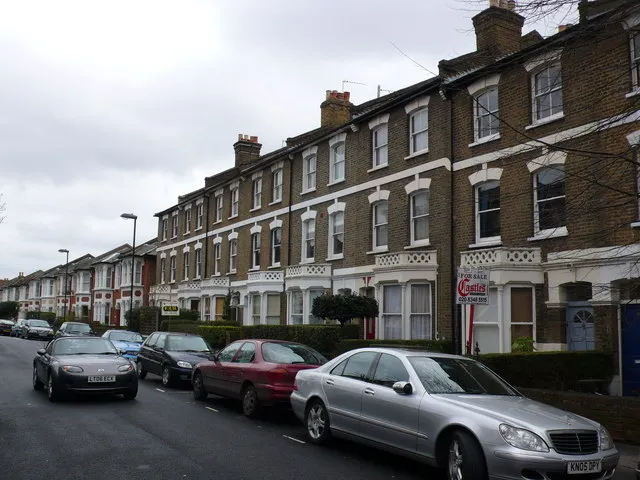
Photo: victorian townhouse stair runner carpet london period home, via wallpapers.com
Walk into a period property in London and the floor tells you a story. Sometimes it's original boards, sanded and oiled. Just as often it's a wool runner pinned over brass rods up three flights, a faded Axminster in the front room, or a silk rug that someone's great-aunt brought back from a posting abroad and nobody has dared touch since.
These are not difficult things to live with. They are, however, easy to damage — and the damage usually happens in the first ten minutes of a well-meant cleaning attempt.
Why period carpets behave differently
A modern synthetic carpet is engineered to be forgiving. Solution-dyed nylon barely notices a strong alkaline cleaner, and the backing is usually a stable synthetic mesh. A carpet from 1900, or a hand-knotted rug from 1930, is a different proposition on almost every axis: the fibre, the dye, the backing, the underlay, and the way it is fixed down.
Wool is a protein fibre with microscopic scales. Add water, heat and agitation and those scales lock together — that's felting, and it is irreversible. Silk is protein too, but finer, and it holds acid dyes that shift colour at the first contact with anything strongly alkaline. Jute and hessian backings, common in older Axminsters, absorb water and shrink, which pulls the whole carpet out of shape and produces the brownish bloom that homeowners describe as "the carpet went rusty".
The high-pressure problem
Modern truck-mount and professional portable systems are excellent on synthetic flooring. Pointed at a hundred-year-old stair runner, the same pressure does three unwelcome things: it drives water through to the underlay and into the tread, it stresses the bond between pile and backing, and it can dislodge the runner from the rods so it never sits straight again.
Delamination rarely announces itself on the day. It shows up months later as a soft, bubbling patch by the top landing, or a seam that opens along the edge of the hall.
Test before you touch anything
Every professional visit to a period property should start with the same short sequence, and there's no reason a careful owner can't do a version of it too.
- Fibre identification. Check under a corner or behind a gripper rod for a label. If there isn't one, a tiny snip of pile from a hidden spot, burned safely, tells you plenty: wool smells of burnt hair and leaves a crushable ash, silk smells similar but leaves a bead, synthetics melt.
- Colourfastness. Damp a white cloth with your intended solution and press it firmly onto a hidden patch for a minute. Any transfer of colour is a stop sign.
- pH. Natural-fibre textiles generally want something neutral to mildly acidic. Anything described as "heavy duty" or "oxygen powered" deserves a test first.
- Moisture and condition. Press a dry tissue into the backing. If it comes up damp, you have a ventilation or leak problem to solve before cleaning, not after.
- A photo record. Snap the condition, the repairs and the edges before work starts. Older textiles often carry old repairs that a customer has forgotten about.
A room-by-room plan
Hallway and stairs
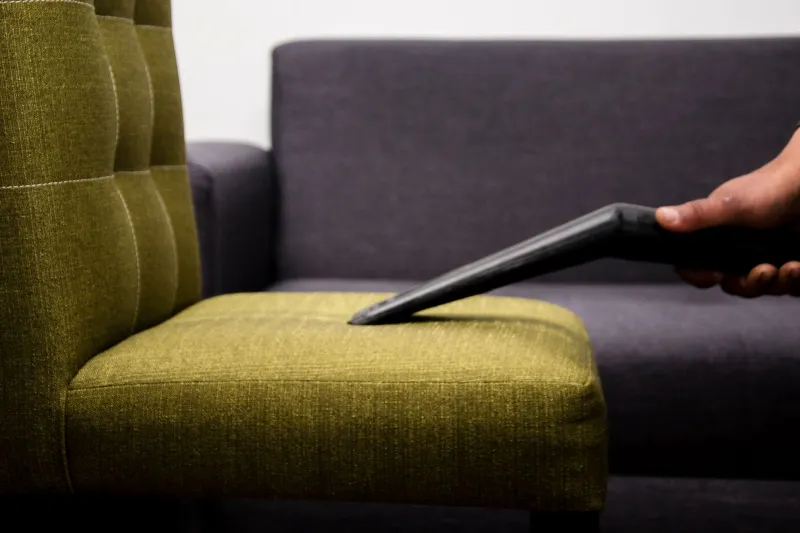
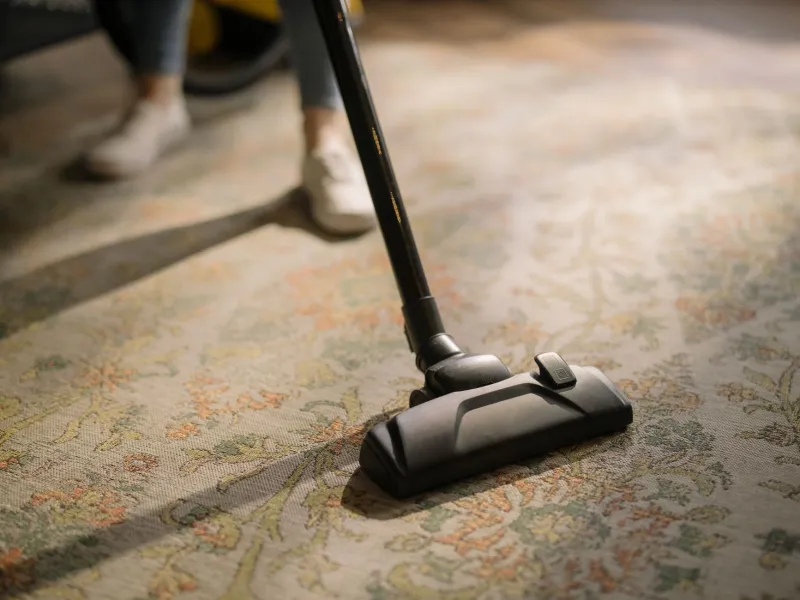
The hardest-working textile in the house. A Victorian stair runner takes every footfall in the building, and the brass rods are only as good as the pockets they sit in. Vacuum with suction only — a rotating beater bar on a worn runner is a mechanical shredder. Check the rods annually; a loose rod abrades the pile beneath it in a straight line that cannot be repaired, only disguised.
The front room
Usually the best-preserved carpet in the house, and the one most exposed to sunlight through tall sash windows. UV fading on wool is permanent, so rotate furniture and consider a blind for the summer months. Dry soil is the other enemy here: grit from the street grinds fibre tips into a dull, greyed surface long before the carpet is genuinely worn.
Bedrooms
Dust, not dirt, is the main issue, and a suction-only pass once a week keeps mite populations in check. Lift lightweight rugs periodically rather than cleaning them in place; the underfloor and underlay need to breathe.
Kitchens, basements and converted cellars
Anywhere with a history of damp needs a moisture check before a cleaning discussion, full stop. Cleaning a textile in a room with rising damp simply accelerates the problem.
What period homeowners can do between visits
Keep the humidity reasonable — period properties breathe, and central heating dries wool out until it becomes brittle. Use felt pads under anything that slides. Blot spills rather than rub, and resist the urge to scrub a silk rug, which will bruise the pile. Rotate small rugs twice a year so wear is even. And if you see a moth hole, deal with it before the next winter, not after.
Knowing when to stop
There's no shame in admitting a textile is beyond a domestic clean. Frayed fringes, perished backing, historic dye bleeding and anything with a conservation label all merit a specialist — and a period property with a hand-knotted carpet is a specialist job by definition. Ask any cleaner what they'll test first and what method they'll use before they give you a price. A good answer mentions fibre, pH and drying. A bad one just mentions a machine.