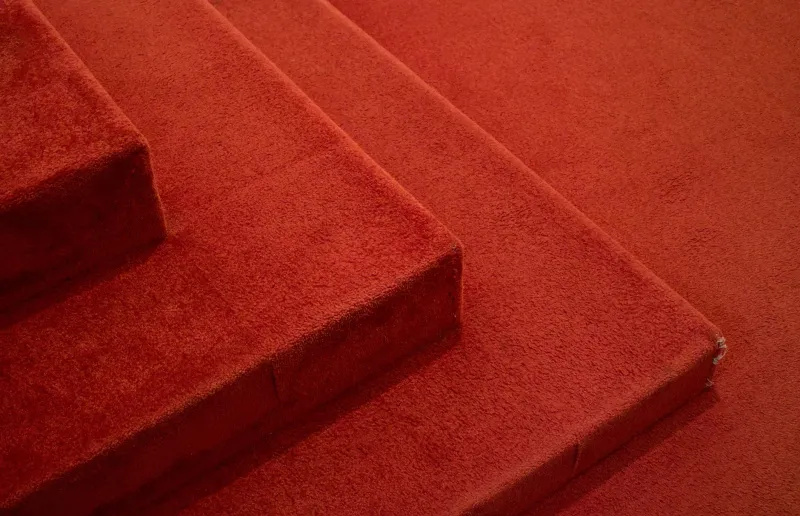
The Strip Underfoot: A London Stair Runner Cleaning Guide for 2026
Photo: Fallaner, CC BY-SA 4.0, via Wikimedia Commons
Stair runners are the quiet overachievers of London carpeting. From the landing, the middle of each tread can look perfectly respectable. Stand halfway up, though, and the story changes: the edges are grey, the turn of the stairs is holding a winter's worth of grit, and there is a suspicious halo of pet hair around the stair rods. In period terraces, mansion blocks and converted houses, that narrow strip of carpet is doing more work than the living room rug ever will.
Why the edges give the game away
A stair runner is designed for constant footfall, but it does not wear evenly. Shoes land near the centre of each tread, then pressure pushes loose grit outwards. That grit gathers along the edges, where the runner meets the skirting or disappears under a rod. Add hallway dirt, road grit from London pavements, cooking smells that settle in the weave and the occasional muddy paw, and you have a carpet that is working hard in a very small space.
The problem is that ordinary vacuuming rarely reaches those edges properly. A standard upright can glide over the middle of a tread but struggle with the tight corners, the riser-to-tread join and the area around fixed rods. Over time, fine particles act like sandpaper against the fibres. The centre may look fine while the edges are quietly being abraded.
What London staircases do to a runner
London homes are full of staircases that were never designed for modern cleaning equipment. Victorian terraces often have narrow treads and tight turns. Conversions can have uneven treads, shallow risers and landings that seem to have been added as an afterthought. Mansion blocks may have shared staircases with heavy traffic and limited access to power or water.
Then there are the fixings. Stair rods are decorative and practical, but they also trap debris and make the cleaning process more delicate. A cleaner cannot simply run a machine up the stairs without thinking about the rods, the runner's tension and the condition of the backing. Fixed rods may need to be worked around rather than removed. Old metal rods can mark damp wool if they are left wet. Uneven treads can cause moisture to pool at one end of a step, which is the last thing you want on a wool runner.
The hidden inventory: grit, hair and hallway traffic
A stair runner collects a very particular mix of debris. There is the grit that comes in from the street and gets carried upwards on shoes. There is pet hair, which tends to wrap around the edges of rods and cling to the risers. There are skin cells, dust and the general soft grey fluff that accumulates in any London hallway. In homes with young children, there may also be traces of spilled drinks, craft glue or the occasional unsuccessful potty-training incident.
Because the runner is vertical as well as horizontal, dirt does not always stay where it lands. It migrates. Grit works its way down towards the edge of each tread. Hair catches on the rod fixings. Moisture from shoes or a damp coat can settle into the pile. The result is a carpet that looks acceptable from above but feels slightly stiff or gritty underfoot when you actually pay attention.
Before the machine comes out
A proper stair-runner clean starts with an assessment, not a hose. The cleaner should check the fibre type, the backing, the underlay and the condition of the rods. Wool runners in period homes need a gentler approach than a tough synthetic stair carpet in a rental flat. Colourfastness should be tested, especially on runners with strong dyes or older patterns. Any loose seams, worn edges or delaminating backing need to be noted before moisture is introduced.
Dry vacuuming is the first real step, and it should include the edges, the risers and the corners around the rods. Skipping that stage and going straight to wet cleaning is a bit like washing a muddy car without rinsing it first. You simply move the grit around and drive it deeper into the pile.
What a realistic London stair-runner clean should include
A professional clean should be controlled rather than dramatic. That means a thorough dry vacuum, targeted pre-treatment for spots and traffic lanes, gentle agitation where the fibre allows, and a low-moisture extraction method that does not soak the runner or the underlay. The cleaner should pay attention to the turn of the stairs, the landing edge and the bottom step, because those are the areas that collect the most concentrated dirt.
Drying matters just as much as cleaning. Stair runners are awkward to ventilate, and a damp runner on a closed staircase can stay wet for longer than expected. Air movers, towel-drying and a sensible drying plan are part of the job. Walking on a damp wool runner is a bad idea, and putting the rods back over wet pile can leave marks. A realistic clean should include clear advice on drying time and when the stairs can be used normally.
Access is another practical London issue. Cleaners need to get equipment up the stairs without damaging walls or banisters. Parking, power and water access may all affect the booking. A straight flight is one thing; a narrow staircase with two turns, a tight landing and a delicate runner is another. Time and pricing should reflect that.
When the runner needs more than a clean
Not every stair carpet can be rescued. If the backing is crumbling, the edges are frayed, the underlay has collapsed or there is long-standing urine contamination, cleaning alone may not solve the problem. A honest cleaner should say so. Sometimes the best advice is to repair or replace the runner before spending money on a deep clean that the carpet cannot support.
For most London homes, though, the runner is simply overlooked rather than beyond help. It gets vacuumed in the middle and ignored at the edges. It collects a year of hallway traffic in a space nobody inspects closely. A proper clean gives that strip underfoot the attention it has been missing, and it keeps the staircase looking and feeling better for longer.
If your stair runner has been quietly collecting London grit, pet hair and hallway dirt, Clean NYC Carpet Cleaning London can assess the fibre, the fixings and the footfall before recommending the right low-moisture clean. The view from above can be deceiving; the edges usually tell the truth.