Before the Kettle Boils: A Pet-Accident Carpet Plan for London Flats With Nowhere to Dry
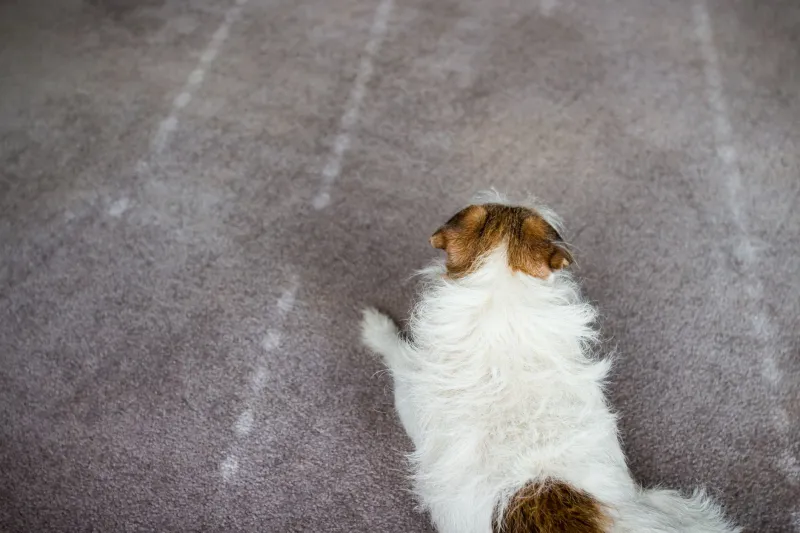
At 6am, the last thing you need is a chemistry lesson. You need a towel, a bin bag, and a plan that does not involve turning your one-bedroom flat into a swamp. Pet accidents on carpet are a common London problem — especially in flats where the nearest balcony is a fire escape and the airing cupboard is already full of towels. The mistake most people make is reaching for a bottle of cleaner and going in hard. That usually pushes the problem deeper into the backing and underlay.
First, Stop the Spread — Not the Stain
Get the pet out of the room and close the door. If there is solid waste, pick it up with kitchen roll or a bag and bin it. Then blot, don't rub. Fold a white towel or a wad of kitchen roll, press it firmly onto the wet patch, and stand on it for 20 to 30 seconds. Repeat with fresh towel until no more moisture transfers. Rubbing frays the carpet fibres and spreads the contamination sideways. Hot water and steam can wait; heat can set odour proteins and drive the smell further into the pile.
Do not flood the area with cleaner. In a house with a garden and a wet vacuum, you have options. In a London flat with one sash window and a shared hallway, every extra millilitre of liquid is a future problem.
The No-Drying-Space Rule: Use Less Water, Not More
Limited drying space changes the method, not just the timing. The aim is to remove contamination with as little moisture as possible. After blotting, apply a small amount of suitable pet-odour cleaner to a cloth — not directly to the carpet — and work it into the affected area. Enzyme-based products are usually the sensible starting point for urine because they break down the uric acid rather than masking it. Patch-test first on wool, silk, viscose or any carpet with a stain-resistant treatment.
Give the product the dwell time on the label, then blot again. If you have a wet vacuum, use it only if the carpet is suitable and you can empty and clean the machine properly. Otherwise, rely on towel extraction. Then get air moving: open a window if it is safe and secure, put a fan near the room, and use a dehumidifier if you have one. Keep the room warm but ventilated. Do not shut the door and hope for the best — that traps moisture and odour in the same small space.
Neutralising Odour Without Making a Lake
Urine odour is not just on the surface. It soaks into the backing, the underlay and sometimes the floor beneath. A surface spray may make the room smell better for a day, but if the source is still wet below, the smell will return as the carpet dries. Avoid bleach, ammonia-based cleaners and strong vinegar solutions on wool. Baking soda can help with surface odour once the area is dry, but it is not a substitute for removing the contamination.
If you use a vinegar solution, keep it weak, test it first, and do not over-wet the carpet. Neutralising is about breaking down the odour source, not covering it with a stronger smell.
Is It in the Underlay? A Two-Minute Check
Press a folded white tissue or kitchen roll into the carpet, put a weight on top, and leave it for a minute. If moisture comes through, the carpet is still wet. Then check the edges. If the carpet is loose at a gripper rod, you may be able to lift a corner carefully — but do not force glued carpet or pull up a fitted wool carpet just to look. If the backing feels damp or you can smell urine close to the floor, assume it has reached the underlay.
Underlay behaves like a sponge. Once urine is in there, surface cleaning will not fix it. Tack strips, gripper rods and concrete floors can all hold odour. That is the point to stop DIY and call in a professional with sub-surface extraction or low-moisture equipment.
Wool, Nylon and the Steam Question
Wool is forgiving in some ways and unforgiving in others. It absorbs liquid quickly, can shrink or felt with too much agitation, and some dyes can bleed or brown when over-wet. Stain-resistant nylon is tougher on the surface, but the backing can delaminate if it stays damp, and heat can set odour into the fibre. Steam cleaning is not a first-hour fix for urine. It is a method to consider once the contamination has been removed and the carpet is dry — and even then, only if the fibre and backing are suitable.
If you are unsure what your carpet is made of, treat it like wool. Use less water, less heat and less agitation. For a genuine wee-soaked patch in a rented flat, a low-moisture professional clean is usually safer than a borrowed steam cleaner and a hopeful afternoon.
When DIY Stops Being the Cheapest Option
Stop and book help if the patch is bigger than a dinner plate, if there have been several accidents in the same spot, if the underlay is damp, if the smell remains after 24 to 48 hours, or if the carpet is wool, silk or a delicate blend. The same applies if you have a baby crawling on the floor, a rental inspection coming up, or an office carpet that needs to be usable tomorrow.
A low-moisture clean is not a magic wand, but it is designed for exactly this London problem: flats with limited drying space, carpets that cannot stay wet for days, and odour that has gone beyond the surface. Our team can assess the backing and underlay, extract what a towel cannot, and tell you honestly whether the carpet needs a deeper treatment or replacement.
The First Night and the Next 48 Hours
Keep the pet off the area, lift furniture legs onto foil or coasters, and keep the air moving. Check the patch the next morning with a dry white tissue. If a stain reappears as the carpet dries, that is wicking — moisture is bringing contamination back up from below. Do not scrub it again. Blot, and consider professional extraction.
Most importantly, do not put a rug over it and call it solved. In a small flat, trapped moisture and odour have nowhere to go. Deal with the source early, dry the room properly, and you will have a much better chance of keeping the carpet — and the deposit.