The Doorbell Sprint: Last-Minute Carpet Rescue for London Flats

Photo: 35mmMan, CC BY 2.0, via Wikimedia Commons
You get the message at 2:47pm: someone is coming at 3pm. Maybe it is a letting agent with a couple who are “in the area”. Maybe it is your landlord, doing the inspection he promised to schedule but did not. Maybe it is friends who forgot to text before getting on the Tube. Either way, you are standing in a London flat, looking at a carpet that suddenly seems to have a personality, and you have about fifteen minutes.
This is not the moment for a deep clean. It is a moment for triage. Think of it like a hospital handover: deal with what is visible, stable and likely to spread; ignore what is old, permanent or better hidden by a chair. Here is the realistic version, not the one where you somehow hire a machine, buy three potions and dry a whole room before the bell goes.
First: stop, look, and pick your battles
Do not start scrubbing the first mark you see. Walk to the door, turn around, and look at the room the way a visitor will. In London flats, that is usually from a narrow hallway into a living room, or from a doorway across a bedroom. You will notice the big shapes first: a dark patch by the sofa, a grey track through the middle, a ring near the bin. Those are your priorities. The tiny speck under the radiator is not.
Open the curtains. November light is low and grey, which is actually helpful: it flattens some marks and exaggerates others. Turn on a lamp and angle it across the floor. Raking light shows up crumbs, pet hair and flattened pile far more honestly than overhead light. It also tells you when to stop.
The order of operations that actually works
Work from dry to damp, and from the edge of a stain to the middle. That is the whole rule. Everything else is detail.
Start by clearing the floor. Shoes, bags, charging cables, the odd sock, a stray earring back. A carpet looks dramatically better when it is not being used as a shelf. If you have a vacuum within reach, do the main walking route and the bit just inside the door. Slow passes, not frantic ones. A quick once-over with the crevice tool along the skirting can lift more dust than you expect.
Then deal with the fresh, visible spots. Blot, do not rub. Fold a clean white cloth or kitchen roll, press down, and hold. For food or something soft, lift the solids first with the edge of a spoon. For a fresh drink spill, a little cool water on the cloth is usually enough. Work from the outside of the mark inwards so you do not spread it. If the cloth comes away clean after two or three presses, stop. You are not trying to rinse the whole carpet.
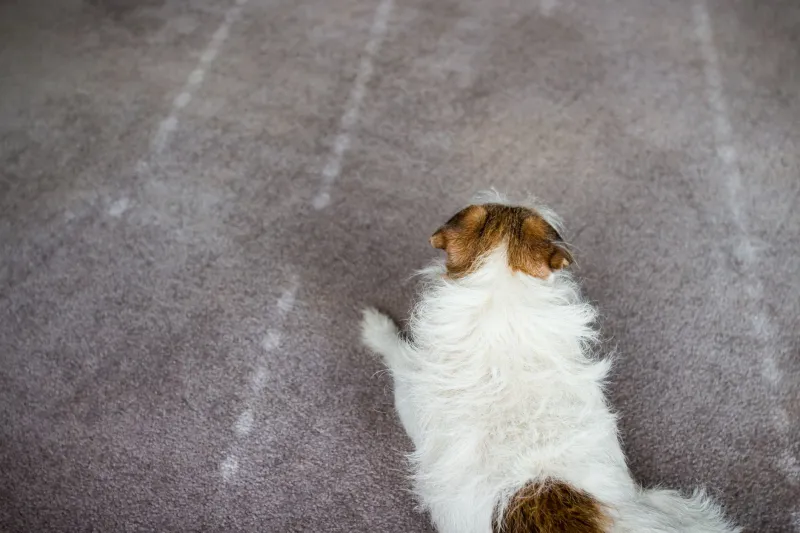
Pile lifting is the quiet winner. Doorways and paths between rooms get flattened by feet, which makes them look dirtier than they are. A soft brush or the upholstery attachment on a vacuum, used gently in one direction, can make a crushed carpet look cared for. Do not attack it. You are grooming, not exfoliating.
The fast wins that are genuinely worth doing
Air movement is your friend. Open a window if the weather allows, even for five minutes. Damp, still air makes a room feel tired and makes any faint odour more noticeable. If it is raining, use a fan on a low setting and point it across the room, not directly at a wet patch.
Lighting is the other free fix. A floor lamp in the corner, angled across the carpet, softens the room and shifts attention upwards. Close the door to a bedroom that is not part of the viewing. Put a clean doormat at the entrance and move shoes out of the hallway. These are not carpet tricks, exactly, but they change how the carpet is read.
A quick vacuum line down the middle of the room is worth more than a wet patch in the corner. Straight-ish passes make a carpet look maintained. Chaos makes it look like a crime scene.
Shortcuts that backfire badly
Do not drag out a supermarket hire machine. It will leave the carpet wetter than you think, and wet wool in a London flat in November is a problem, not a solution. It also takes hours to dry, which means the visitor will smell the shampoo and see the damp edges.
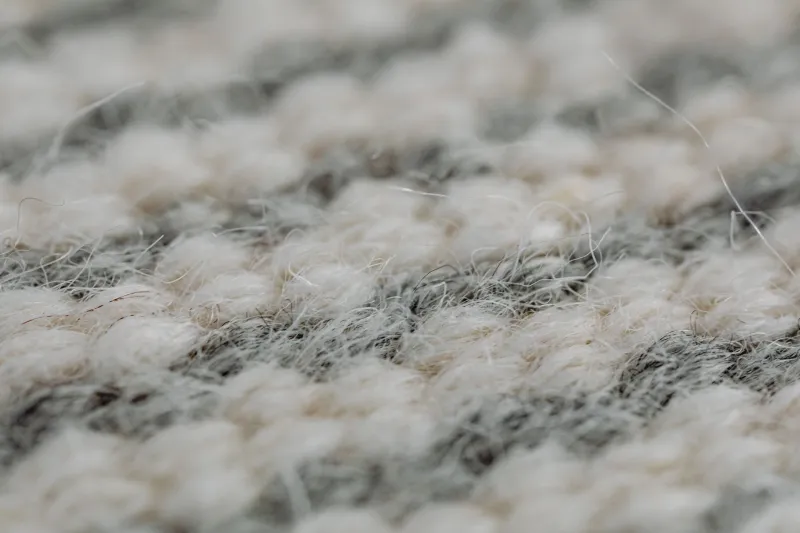
Do not reach for bleach, vinegar or a thick paste of bicarbonate on a wool carpet. You are more likely to change the colour or damage the fibre than remove the mark. Do not rub hard with a cloth. That fuzzes the pile and makes a small stain into a visible bald patch. Do not use a hairdryer on a wet spot to speed things up. Heat can set what you are trying to lift, and it drives moisture deeper into the underlay.
And do not cover a wet patch with a rug. It looks obvious, it traps moisture, and it will still be there when the rug comes up.
The stains no fifteen-minute fix will hide
Some marks are honest. Ink, hair dye, turmeric, old pet accidents, burns, bleach spots and anything that has been there since the last tenant are not going to disappear with a dab and a hopeful expression. If a stain is dark and dry, do not wet it. Blot only if it is fresh. If it has been there for months, leave it alone.
If this is a landlord inspection, do not try to disguise a permanent mark with furniture and then act surprised when it is noticed. Point it out if asked. A small, disclosed mark is a maintenance issue. A hidden one looks like a cover-up.
When to stop and simply rearrange the room
After fifteen minutes, if the mark has not shifted, stop. You are now making things worse, or at least wetter. Move the armchair slightly. Angle the floor lamp. Put the plant where it actually gets light. Close the door to the room you cannot rescue. A strategically placed piece of furniture is not a crime; it is just staging. Dimming the lights is fine. Pretending a burn mark is a shadow is not.
The trick is to make the room look intentional. A clear floor, a straight vacuum line and a bit of air will do more for a last-minute viewing than a frantic wet patch that nobody can walk on. And if you have more than an hour, that is when you book a proper clean — not when the doorbell is already buzzing.